
Levee / Services
Inspect · state · fix
Garage door repairs & services in Maitland
Every job starts with what we found.
Not a sales pitch at the door. We inspect, we state the findings in plain terms, and we fix what the findings say, with your approval before any work happens. It is how this town keeps its levee banks, and it is how a door should be kept too.
Repairs · the urgent path
Springs, cables, tracks and panels
A garage door weighs as much as a person or three, and the torsion spring above the opening carries all of it, every cycle. Springs are consumable: they are rated in cycles, and on the river flats rust shortens that life again. When one lets go, the door becomes dead weight, and the opener was never built to lift dead weight.
Cables fray before they fail. Tracks get pushed out of line by a bumped car, a swollen jamb or plain wear. Panels take the hit when a door is forced. All of it is repairable; the inspection decides what actually needs doing.
If the door is heavy, jerky or will not lift, stop using it. Do not pull the manual release on a door that will not lift, and never unbolt anything near the spring. Torsion springs are under load and are not a home repair.
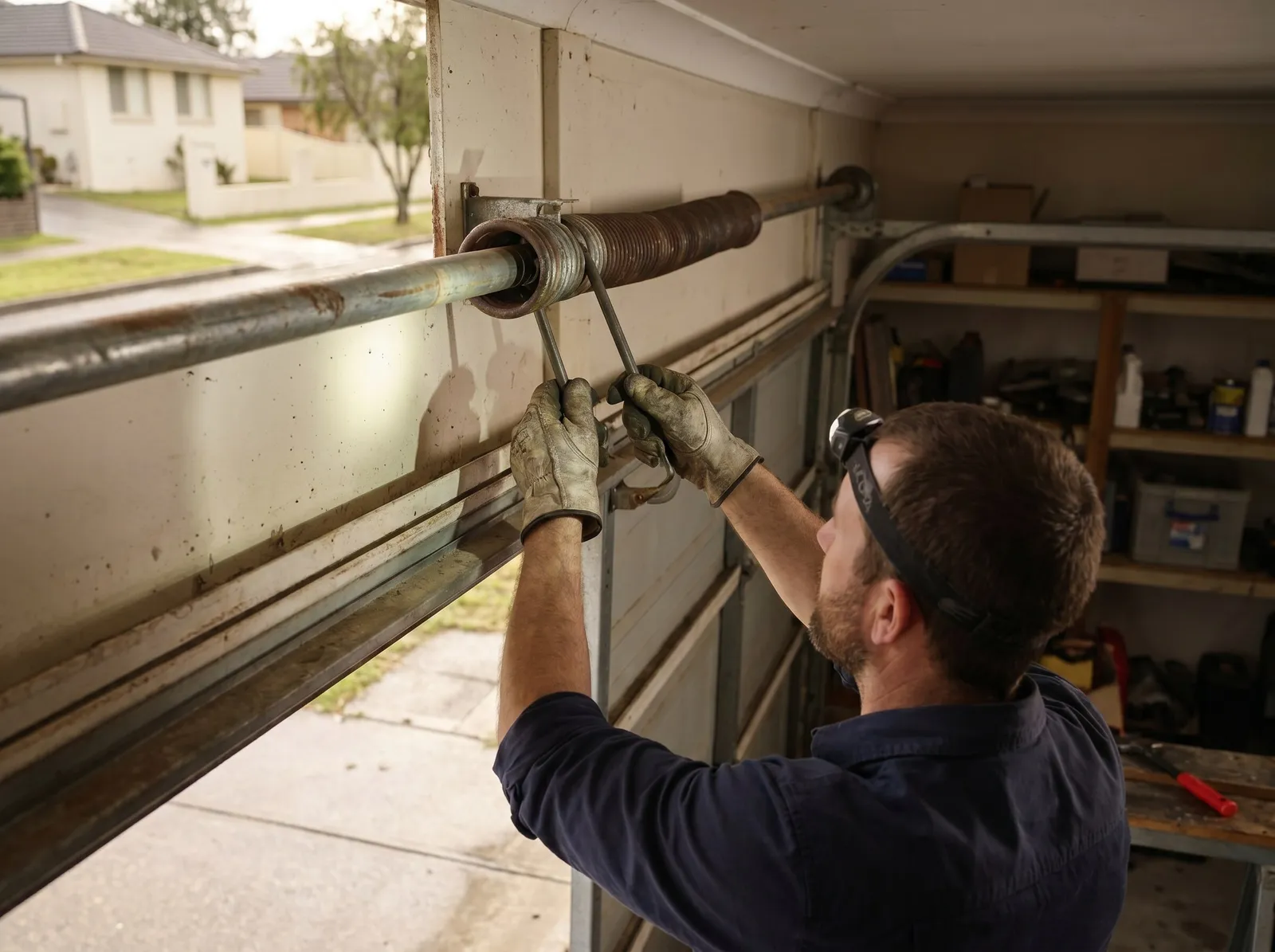
What we check
- Spring condition, rust and remaining cycle life
- Cables, drums and bottom brackets
- Track line, rollers and hinge wear
- Door balance with the opener disconnected
Common findings
- A snapped or sagging torsion spring
- Rust-pitted springs and frayed cables on the flats
- A track pushed out of line, rollers riding the edge
- An opener straining to lift an unbalanced door
What happens next
We state the findings and what each one needs, you approve the work, and the door goes back to lifting its own weight. If a fault is safe to leave, we say so.
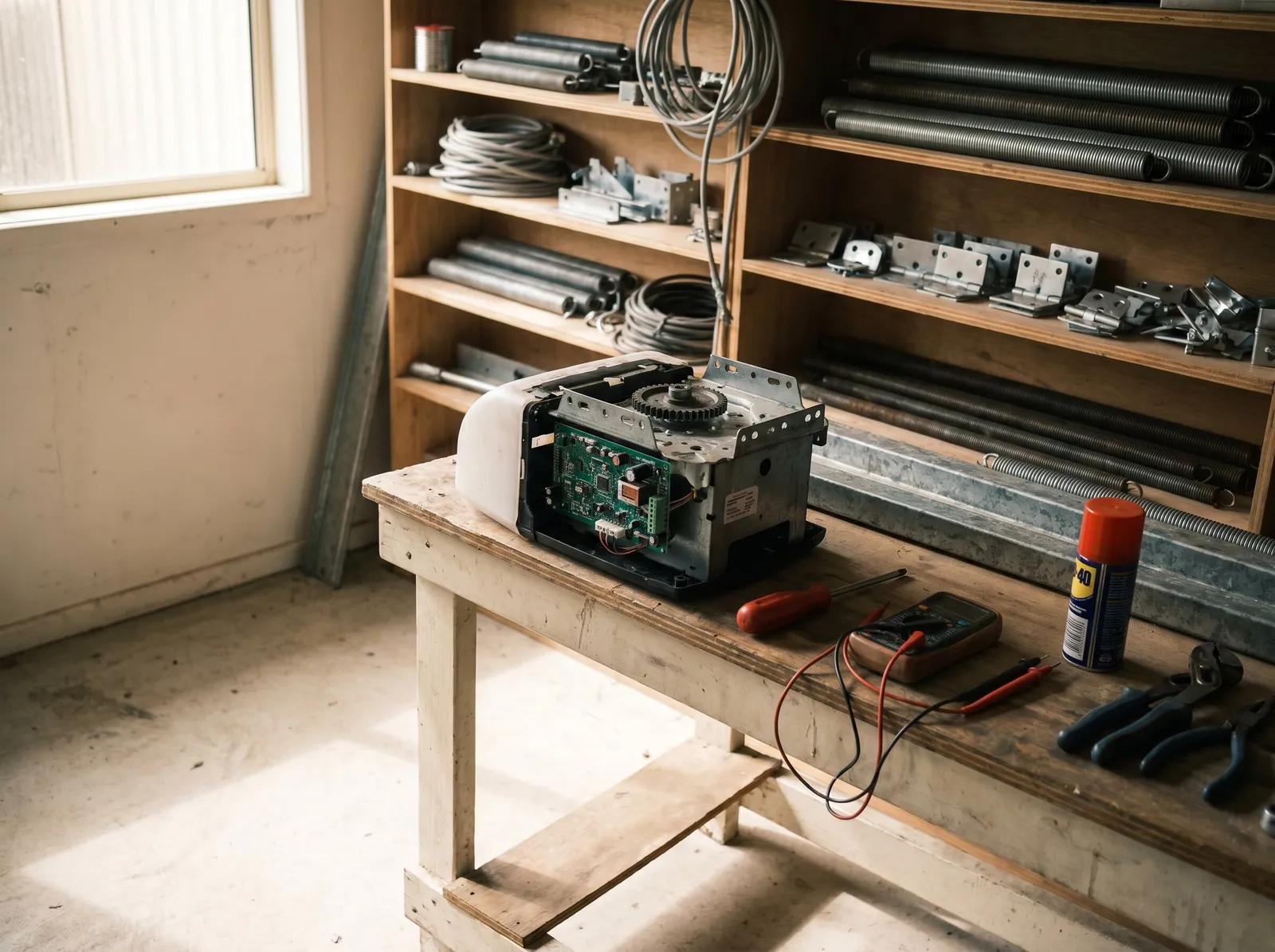
Openers
Opener faults, service and replacement
The opener is the part of the door most people think of as the door, right up until the power goes out. Remotes that stop pairing, a door that reverses halfway for no reason, a motor that hums but does not move: most opener faults announce themselves quietly first.
In the hill estates, thousands of builder-installed openers are now past their builder warranty and due a first proper service. On any opener job we also check the door itself, because an opener dragging an unbalanced door dies young.
Where an opener needs mains wiring, that work is done by a licensed electrician, as NSW law requires.
- Force and travel limits set so the door reverses on obstruction
- Battery backup checked, or flagged if the unit has none
- The manual release shown to the household, every time
New doors · the considered path
New sectional doors, measured then quoted
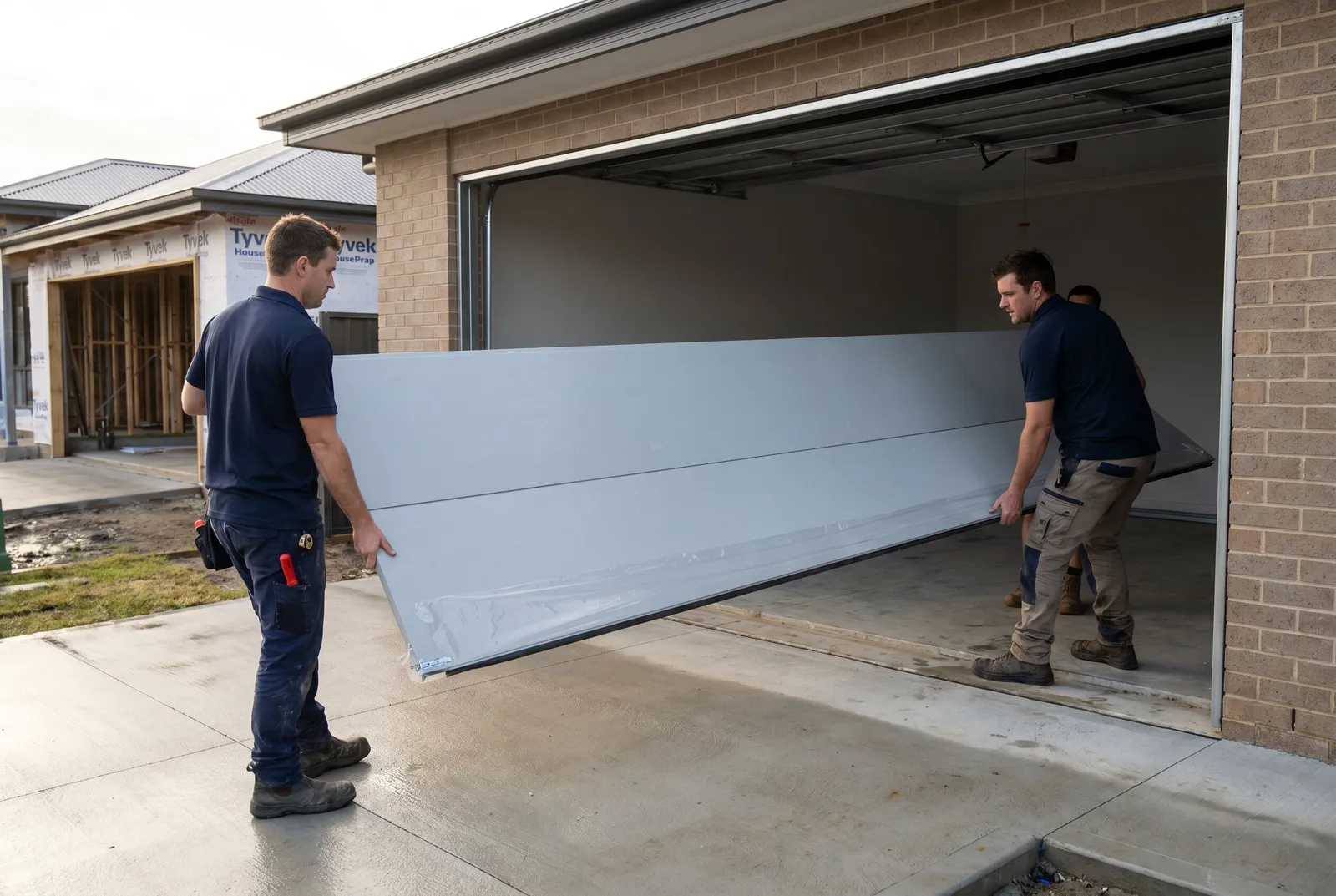
A new door is a considered purchase and we treat it like one. We measure the opening on site, because openings are rarely as square as the plans say, and talk through the door types that suit it: panel profile, insulation, wind rating for an exposed elevation, colour against the facade.
The quote comes before anything is ordered, and it is a quote, not an estimate that grows. In the growth corridor, where the door is a third of the facade, getting this right changes the whole street face of the house. On the older flats, a new sectional on a garage that has worn out its tilt door usually means new tracks and springs sized to the opening, not forced onto old hardware.
We fit doors from the established Australian makers, chosen for the opening rather than for a brand poster on our wall.
Pre-season service
The service before the season
Maitland's levee scheme works because it is inspected before the water comes, not repaired after. A garage door earns the same discipline. Storm season here brings the two things doors hate most: water where it should not sit, and blackouts on the mornings you most need the car.
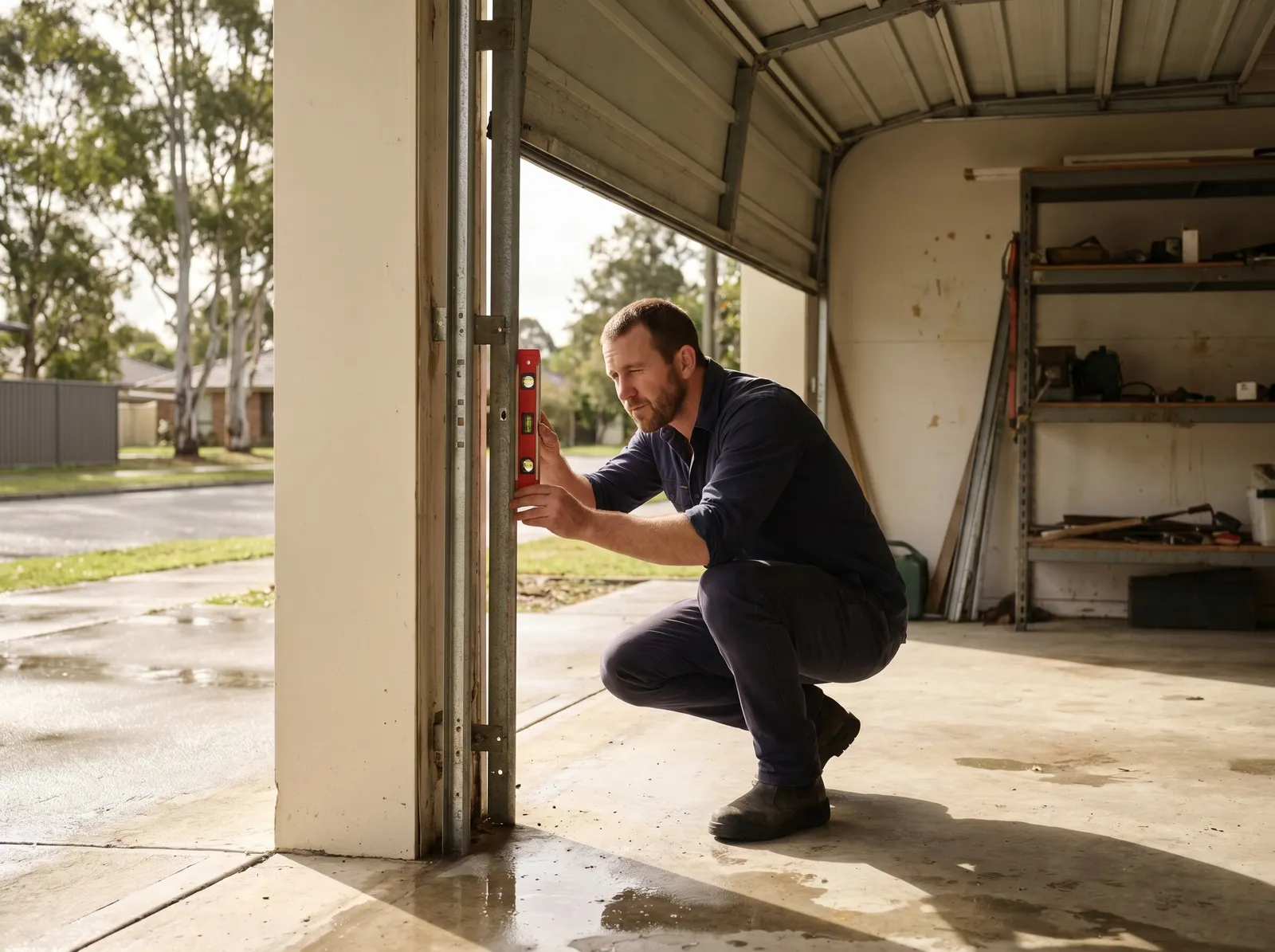
A pre-season service walks the whole system: spring tension and rust, cable wear, track line, roller condition, the bottom rail and weather seal, opener force limits, and the manual release, which we show to the household because a release nobody can find is a release that does not exist.
What we check
- Spring, cables, rollers, hinges, track line
- Bottom rail, weather seal, slab drainage line
- Opener limits, battery backup, manual release
Common findings
- Seals perished on the weather side
- Rust starting along the bottom rail
- A manual release the household had never used
What happens next
A written list of findings and levels, plainly stated. Most doors need lubrication and small adjustments; some need parts; either way you decide with the facts in front of you.
How pricing works
Findings first. Price before work. No surprises.
You will not find dollar figures on this site, and that is deliberate: a price given before anyone has seen the door is a guess dressed up as a promise. Here is how it actually works instead.
- Repairs and faults A call-out covers the visit and the inspection. We state what we found and price the fix on the spot, before any work starts. You approve it or you don't; a door that only needs adjustment gets adjustment, not parts.
- New doors and openers The measure and quote are free. The quote is itemised and holds; nothing is ordered until you accept it.
- Pre-season service A set service visit with a written findings list. Anything beyond the service itself is quoted separately before it is touched.
Protection is not a wall you trust. It is a system you maintain.
The Maitland lesson, applied to doors
Book before the season
Tell us what the door is doing.
A snapped spring, a door off its track, an opener playing up, or a new build waiting on a door. State what you see; we take it from there.